Divorce in a Small Town

You may ask why I am still talking about this when my own divorce was ten years ago, but the reality is that time alone doesn’t dissolve experiences that fundamentally change who you are…even after a decade. Over the last ten years, I have had to process the things that my body had to learn to survive, the prolonged scrutiny, the loss of belonging, or perhaps the absence of it, the quiet hatred I have absorbed. The story didn’t end when the paperwork was signed or even when I changed my last name. I am still talking about it because I still witness it in my nervous system, in my sense of safety, in the way I have had to learn to measure rooms, read faces, and decide when it was safe to take up space. Some experiences don’t age out; they leave a lasting imprint. And healing does not mean forgetting what formed you. It means finally feeling safe enough to give it a name. When we name things, we take their power.
I have always known that divorce in a small town is not a private reckoning. It is a communal shunning experience, whether you consent to it or not. But what I didn’t realize is that it winds up being a story that stops belonging to you the moment the first whisper leaves someone else’s mouth. It becomes something to be passed around in grocery store aisles, church pews, and pickup lines, something whispered that is still deafening.
What I am coming to recognize a decade later is that in a small town, divorce is not inherently sinful; it isn’t about leaving your spouse. It is the moving away and leaving it all behind that makes you an inherent outcast.
If you stay, if you remain planted in the same zip code, the same pew, the same patterns that everyone else has learned to live inside of, you are granted a strange kind of grace. Your pain becomes familiar, respectable, hell, even coined as inspirational by some. People rally around you in ways that feel supportive on the surface but are often more about preserving the comfort of the collective than about your actual healing. You are allowed to suffer as long as your suffering does not challenge the story that the people of the town tell themselves about loyalty, endurance, and what it means to be good. But if you leave, that is when everything shifts. You shatter the illusion, rewriting the narrative.
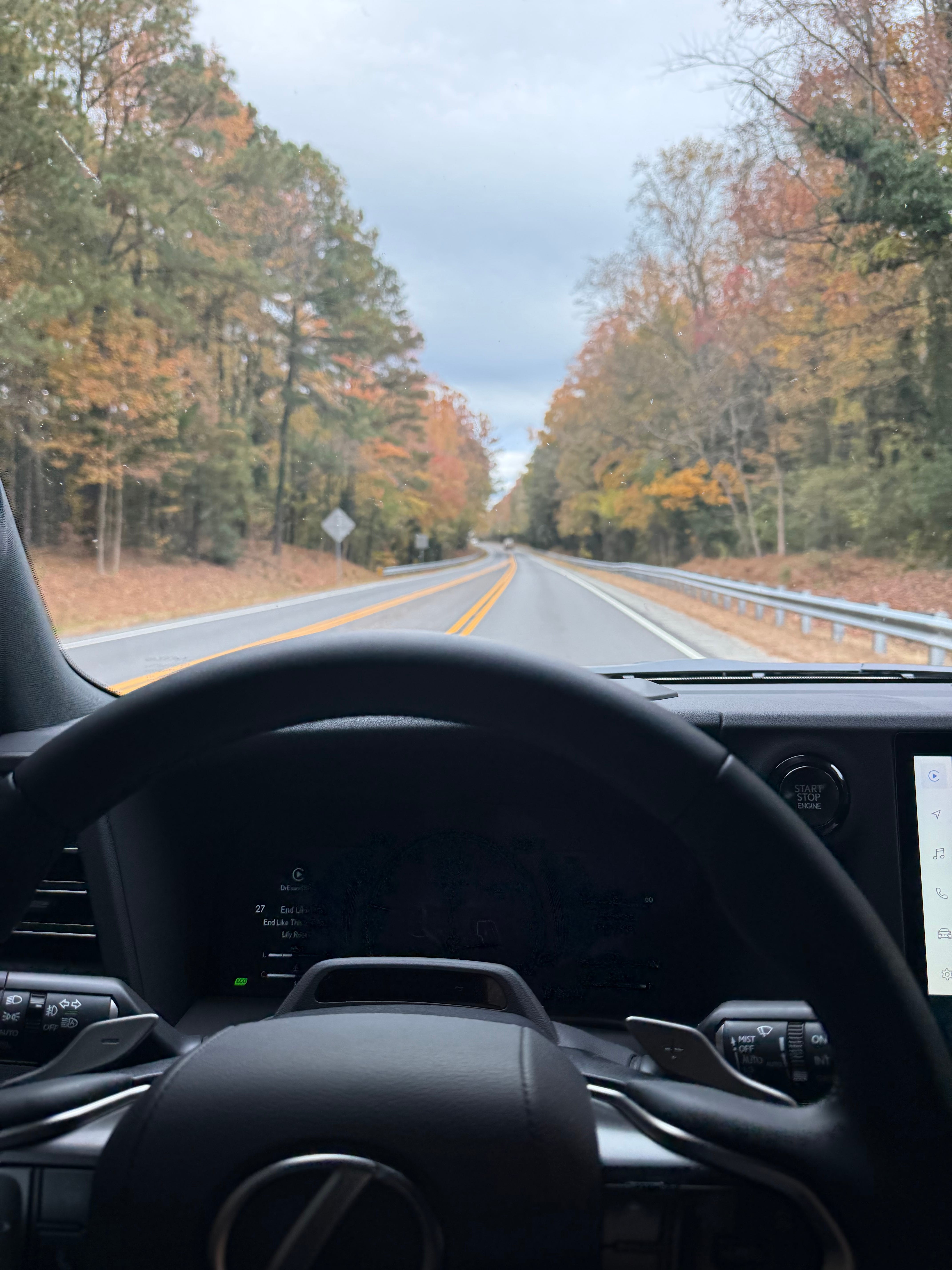
Leaving disrupts their social order. Your ability to face the truth and leave everything in your rearview forces people to sit with the possibility that staying is not the only option, that there is life on the other side of that dirt road. For me, that truth alone was enough to make me the very definition of an outsider.
Instead of grace, I was branded with a scarlet letter, though not earned out of reality…only earned because it made better pew worthy news. And more so because it lent itself to “the why” behind my leaving. There had to be a reason, you see, one that allowed the truth to stay hidden. So, many versions were created, crafted, and spun up. And now, even a decade later, I feel it in the way conversations change when I enter a room, in the way people seem to know intimate details of my life without ever having spoken to me directly.
Gossip, in these places, is rarely framed as cruelty. It is disguised as saying a prayer, as worry, as community concern. But never as judgment. Silence and side eye glances become a form of punishment. And somehow, the people who speak the most about morality are often the least willing to extend it beyond the boundaries of what feels familiar and safe to them.
What has become painfully clear over time is how selective the compassion is.
The word “inspiration” is reserved for those who remain in the fold. Those are the selected ones… You know the type, the small-town homecoming queen who never left, now publicly unraveling in her own divorce, is lifted up and praised for her resilience, her strength, her grace under pressure. Her story is treated as tragic but noble, something that happened to her, something she is surviving in a way that keeps the collective comfortable.
Meanwhile, the woman who “wasn’t from here” (that’s me!), the one who fought her battles quietly and without spectacle, becomes something else entirely. She is not admired for her strength; instead, she is scrutinized for her very presence. Every appearance in the school pickup line feels like headline news. Every purchase, every decision chalked up to someone else’s success. Because there is no way she can be successful on her own, not after leaving.
The difference, the judgment, and the perceptions were not related to the facts of my divorce. The judgment was because I had the audacity to choose myself. Small towns often reward those who keep themselves small. Those who wrap themselves tightly in tradition, even when that tradition is laced with toxicity. There is reverence for endurance over transformation, for loyalty over truth, for keeping the peace even when the peace is built on silence and lies.
The moment I decided to become more, to do more, to live in alignment with who I actually am rather than whom I was expected to be, I became dangerous. When I stopped accepting disrespect and loneliness as the “way it is”, I became the problem. Not because I am doing anything wrong, but because I am proof that another life is possible, and that possibility is unsettling to those who have made their peace with staying stuck.
What hurts most is not the gossip or the glances or the whispered conversations that stop just a beat too late. It is the realization that so many people know my story without ever knowing me. Hell, I even wrote a book that they could take the time to read, if they were remotely interested in my real story, the real truth. Instead, they feel entitled to my pain but unwilling to offer real presence. That righteousness on Sunday mornings, as they elevate themselves, coexists so easily with quiet cruelty the rest of the week. It’s honestly laughable how they think no one notices.
I spent fourteen years watching people shrink others. Watching them smile in the faces of the same people they are backstabbing as they walk away. I have felt what it is like to be spoken about more than spoken to. I have seen how quickly people turn on each other, and even turn to each other’s spouses…and it is all accepted. And I grew tired.
Tired of places that confuse smallness with goodness. Tired of environments that punish truth-telling and reward silence just because you head up the PTA. Tired of contorting myself to fit into a story that was never written with my heart in mind.
I hate that I am seemingly wishing my child’s life to move more quickly, but I truly cannot wait to get so far from this place.
And let’s not twist it: this isn’t because I am running, but because I am choosing a life that does not require me to make myself smaller to belong. Because I deserve a world where growth is not treated as betrayal and truth is not something you have to pay for by becoming the social outcast.