Charted
The HIPAA Violation That Nearly Cost Me Everything

There are cages you leave out of a book, not because they don’t matter, but because you are still actively protecting someone while carrying the bruises of your own survival. I have many of those, and this is one. This is a story I did not put between hardcovers because I have a child whose safety matters more than my desire to be fully seen. He is far more likely to read a book with my name on the spine than scroll through my Substack. So here, in this smaller room, I am telling the truth anyway, because silence has never actually kept anyone safe. It has only made the damage quieter.
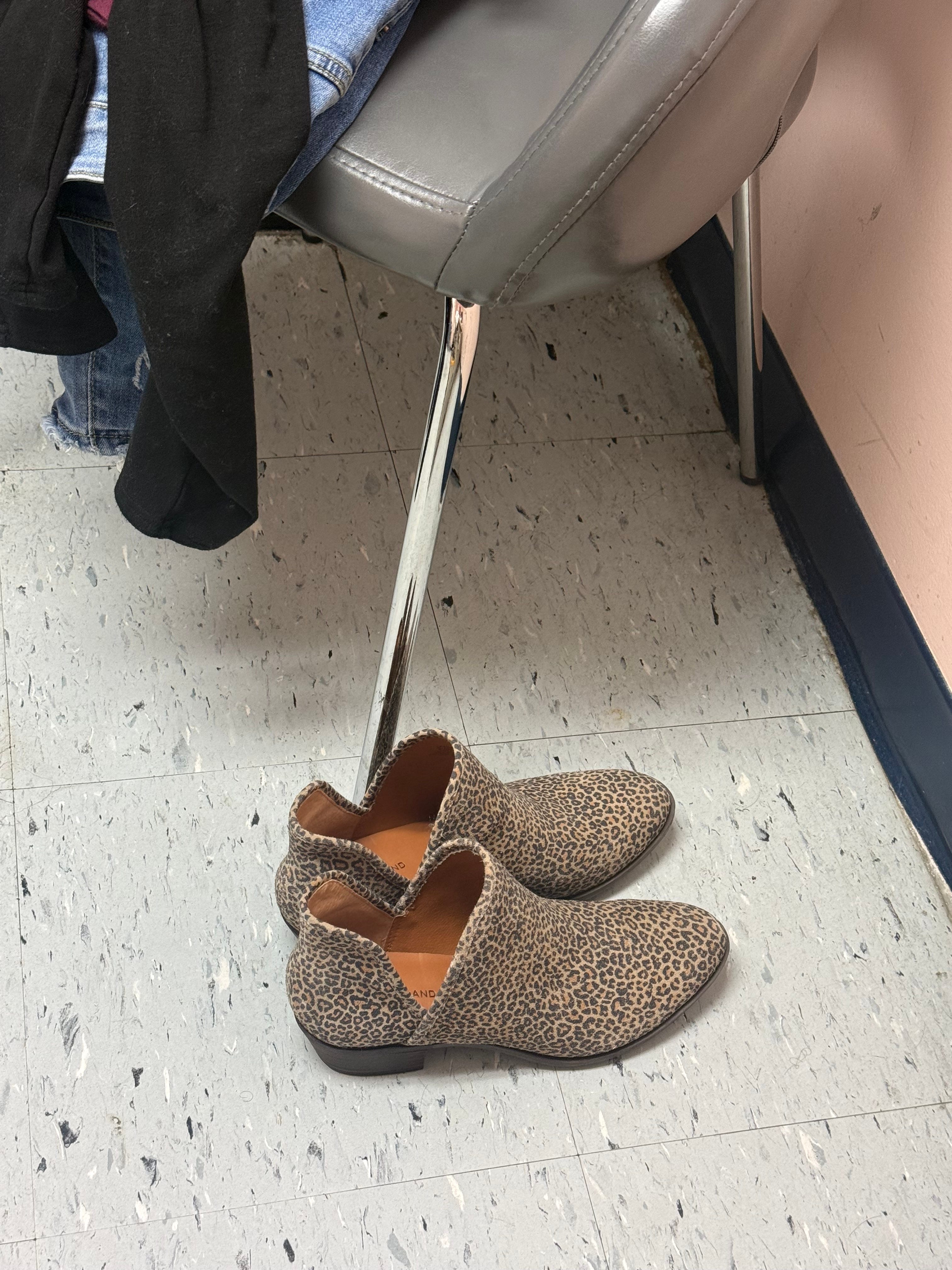
There was a day I walked into a doctor’s office in the small town where everyone knows your name, your family, your business, and usually a version of your story that has already been bent out of shape by gossip and proximity. I wasn’t there because I was sick in the way people like to imagine. I was there because fear had reached a volume I could no longer ignore. The rumor mill was spinning so fast it felt like it could lift itself off the ground, and I didn’t know what to believe, what was real, what had been done to me without my knowledge, or what risk I might be carrying in my body simply because I trusted the wrong person. So, I walked into the office with my head held high, my hands shaking like a leaf. A sweet young woman walked me into a cold, sterile exam room where I undressed slowly, folding my clothes on the chair, shaking like a leaf, tears streaming down my face as I asked for an STD panel from the doctor I had taken the care to hide my undergarments from just moments before. I didn’t ask for this test out of recklessness, but out of self-preservation, the kind that doesn’t look brave or dignified, the kind that looks like shaking on that crinkled paper in an unnaturally cold exam room, wondering how your life got small enough that you were afraid of your own health.
That moment alone should have been private. It should have stayed between me, my doctor, and my medical record, a place that exists specifically to protect people when their lives are already unraveling. But privacy, I learned, is apparently optional when entitlement is involved. Someone close to me, someone who knew me, someone who sat in my classroom and looked me in the eye as if there were respect between us, decided that my medical record was not mine and not private. A student, emboldened by access they had no moral right to use, went into my chart, looked up why I had been seen, and then shared it with the rest of the class like it was gossip, like it was entertainment, like my fear was a punchline. HIPAA violation feels too clean a phrase for what that actually was, so let’s call it what it was: a betrayal layered on top of trauma, served publicly, with a smirk.
There is something uniquely violent about having your most vulnerable moments handled by people who do not carry the weight of consequence. I was already navigating the collapse of trust, already trying to hold myself together in a town that does not forget and does not forgive women for surviving loudly. I take that back, they don’t forgive women who leave and then survive loudly. Suddenly, the narrative wasn’t just that I had been hurt; it was that my response to being hurt was something to be dissected, judged, whispered about in hallways and classrooms by people who had no idea what it cost me to show up and teach while my life was actively imploding. As if that wasn’t humiliating enough, it had spread to the ears of my sons’ day care staff, the church pews, and the bleachers. I couldn’t escape it.
I want to be very clear here, because clarity is part of my reclamation. I have no desire to ever be misquoted or misunderstood. There is nothing shameful about getting tested, nothing scandalous about protecting your health, nothing immoral about responding to fear with responsibility. The shame belongs entirely to the person who decided to put me at risk, the person who thought access equaled permission and that my pain was theirs to distribute. But shame has a way of clinging anyway, and it took up residence in places I didn’t invite it, making me question whether I had the right to exist in public while bleeding in private. I still have anxiety walking into the doctor’s office, wondering who has access to my records, who is careless enough to take a peek for gossip’s sake.
Just recently, after years of hiding from this, never addressing it, I realized I was not alone in this space. I had built this illusion that I was the only one to ever face this. I had deceived my own brain because one of my authors shared a story with me that stopped me cold. Different details, different town, same familiar shame though. She spoke carefully, like someone pausing to read the room before saying something dangerous out loud, and as she talked, I felt the click of recognition settle in my chest. What happened to me was not rare; it was simply unspoken. More women than will ever admit it have sat in exam rooms, wearing that thin paper skirt, carrying fear they didn’t earn, bracing for judgment they didn’t invite, and then watched their privacy dissolve at the hands of other people’s audacity. The shame survives because silence has been framed as dignity, because naming these violations has been labeled dramatic or unnecessary, and because women are expected to absorb harm quietly and call it resilience. Hearing her story didn’t reopen the wound; it clarified it and healed a part of it that was still wide open unbeknownst to me. This was never just about me. It was about how often women are asked to carry other people’s consequences as if they were personal failures.
This is one of the cages I barely survived, not because of the test, but because of what it represented. It represented how quickly a woman’s credibility, dignity, and humanity can be stripped when people decide she is no longer entitled to privacy. It represented how institutions meant to protect can become weapons when boundaries are ignored. The same institutions that scapegoated me, while leaving the culprit unpunished, only mere months after this scandal. It represented the quiet cruelty of small towns and the loud cruelty of people who mistake proximity for permission.
Like I said, I didn’t write this in the book because the book already carried enough weight, and because my child does not need this chapter turned into collateral damage. But I am writing it here because keeping it locked inside my body has begun to feel like a different kind of harm. I survived that day, that violation, that exposure, and I am no longer willing to pretend it didn’t shape me. If this makes someone uncomfortable, good. Discomfort is often the first sign that the truth has landed where it was meant to.